Why Endocrine-Free Beauty Matters More Than Ever

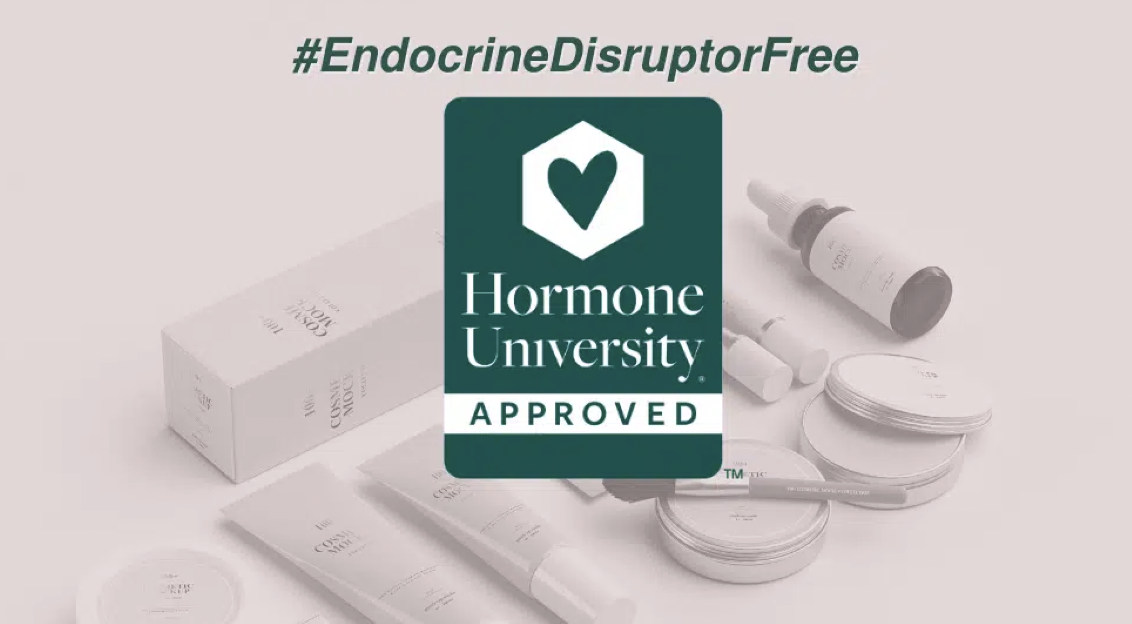
Ever heard of endocrine disruptors (EDCs)? If not, we think you’ll soon be hearing a lot more. What was an emerging conversation when we first wrote about this topic a couple of years ago has now become mainstream, with doctors, wellness platforms, regulatory bodies, and pioneering brands bringing endocrine disruption to the forefront of the beauty industry. Independently verified certifications, like the Hormone University Seal of Approval, now give brands across vitamins, food, personal care, and household products a way to demonstrate they meet some of the strictest standards for hormonal health. Organizations including Sorette, EWG, MadeSafe, and NATRUE also provide verification, creating a growing ecosystem of endocrine-safe certification.
EDCs are “natural or man-made chemicals that may mimic or interfere with the body's hormones, known as the endocrine system” (National Institute of Environmental Health Sciences). They are everywhere,from plastics and detergents to food, toys, cosmetics, and household products. In beauty, the concern is particularly pressing: daily use over decades leads to cumulative exposure. Ingredients like parabens, benzophenones, bisphenols, and phthalates, often used for stability, texture, or fragrance, can be difficult to avoid (Peinado et al., 2020; MDPI, 2018).
In a short space of time, the landscape has shifted dramatically. Early adopters are already leading the way. Brands such as Wellpeople, Rosy & Earnest, and Glow, Hormone University’s strategic partner, are redefining clean beauty with endocrine-free collections.
While gaps remain in research and understanding of long-term effects, studies indicate that “Exposure to endocrine disruptors has been progressively linked with a growing number of increasing diseases in the human population…a key concern is the cumulative and synergic effects that endocrine disruptors could have when mixed in consumer products” (MDPI, 2018). And regulators are responding: the EU and Canada have restricted ingredients like triclosan, phthalates, BPA, and certain parabens, and more jurisdictions are expected to follow.
Why Beauty Founders Should Care—Right Now
This is no longer a niche or theoretical issue. The business case is becoming clear clear.
Consumer awareness is accelerating. Apps like ToxFox, Beautydecoded, Impact Score, and Think Dirty are reshaping how consumers evaluate products. Customers are no longer relying solely on brand claims; they are checking, comparing, and choosing accordingly.
Health impacts are increasingly documented.
Exposure to endocrine disruptors has been increasingly linked to conditions including endometriosis, fertility challenges, thyroid disorders, early puberty, hormone-related cancers, metabolic disease, and neurodevelopmental impacts. This is no longer fringe science, it is becoming part of mainstream medical and public health discourse.
The market is beginning to differentiate.
Early leaders are moving beyond vague “clean” language toward independently verified, endocrine-safe formulations. They are defining a higher bar, one rooted in evidence and science.
Transparency gaps make certification more valuable than ever.
Many consumers are unaware that endocrine disruptors can still be present under umbrella terms like “fragrance.” As scrutiny increases, third-party certification is an important measure that can offer clarity.
What Founders Can Do
If you're a founder in the beauty or wellness space, here's what you need to consider:
1. Formulation Decisions - Every product development cycle is a chance to create EDC-fREE decisions. Speak with manufacturers about alternatives; many suppliers now offer EDC-free ingredients when asked. The earlier these considerations are included, the easier it is to integrate them fully.
2. Packaging Matters – Exposure doesn’t stop at the formula. Consider how your packaging materials might contribute to EDC exposure and seek safer alternatives where possible.
3. Certification as Strategy – Pursuing verification like the Hormone University Seal of Approval or EWG certification is more than consumer reassurance. It signals credibility to investors, retailers, and partners, and helps guide internal R&D priorities. Even if you're not ready to pursue it immediately, understanding requirements helps guide potential reformulation priorities.
4. Transparency can be a core value - For brands that are all about transparency they have to be willing to explain why they’ve made certain choices, not just what they’ve excluded.
The Bottom Line
What’s clear is that endocrine disruption is no longer a fringe concern. With mounting scientific evidence, evolving regulation, growing consumer awareness, and credible certifications, this conversation is here to stay. What’s particularly compelling is how the beauty ecosystem, from brands and formulators to manufacturers will respond to a legitimate demand for transparency, and how these choices will shape the future of the industry.
Sources & Further Reading:
- National Institute of Environmental Health Sciences - Endocrine Disruptors: https://www.niehs.nih.gov/health/topics/agents/endocrine/
- Francisco M. Peinado et al., "Endocrine Disrupting Chemicals in Cosmetics and Personal Care Products," IntechOpen, 2020
- Endocrine Disruption by Mixtures in Topical Consumer Products, MDPI
- Hormone University Seal of Approval: https://hormoneuniversity.com/seal-of-approval-hu/
- European Commission - Cosmetics Regulation
- California Safe Cosmetics Program
Why Endocrine-Free Beauty Matters More Than Ever
Ever heard of endocrine disruptors (EDCs)? If not, we think you’ll soon be hearing a lot more. What was an emerging conversation when we first wrote about this topic a couple of years ago has now become mainstream, with doctors, wellness platforms, regulatory bodies, and pioneering brands bringing endocrine disruption to the forefront of the beauty industry. Independently verified certifications, like the Hormone University Seal of Approval, now give brands across vitamins, food, personal care, and household products a way to demonstrate they meet some of the strictest standards for hormonal health. Organizations including Sorette, EWG, MadeSafe, and NATRUE also provide verification, creating a growing ecosystem of endocrine-safe certification.
EDCs are “natural or man-made chemicals that may mimic or interfere with the body's hormones, known as the endocrine system” (National Institute of Environmental Health Sciences). They are everywhere,from plastics and detergents to food, toys, cosmetics, and household products. In beauty, the concern is particularly pressing: daily use over decades leads to cumulative exposure. Ingredients like parabens, benzophenones, bisphenols, and phthalates, often used for stability, texture, or fragrance, can be difficult to avoid (Peinado et al., 2020; MDPI, 2018).
In a short space of time, the landscape has shifted dramatically. Early adopters are already leading the way. Brands such as Wellpeople, Rosy & Earnest, and Glow, Hormone University’s strategic partner, are redefining clean beauty with endocrine-free collections.
While gaps remain in research and understanding of long-term effects, studies indicate that “Exposure to endocrine disruptors has been progressively linked with a growing number of increasing diseases in the human population…a key concern is the cumulative and synergic effects that endocrine disruptors could have when mixed in consumer products” (MDPI, 2018). And regulators are responding: the EU and Canada have restricted ingredients like triclosan, phthalates, BPA, and certain parabens, and more jurisdictions are expected to follow.
Why Beauty Founders Should Care—Right Now
This is no longer a niche or theoretical issue. The business case is becoming clear clear.
Consumer awareness is accelerating. Apps like ToxFox, Beautydecoded, Impact Score, and Think Dirty are reshaping how consumers evaluate products. Customers are no longer relying solely on brand claims; they are checking, comparing, and choosing accordingly.
Health impacts are increasingly documented.
Exposure to endocrine disruptors has been increasingly linked to conditions including endometriosis, fertility challenges, thyroid disorders, early puberty, hormone-related cancers, metabolic disease, and neurodevelopmental impacts. This is no longer fringe science, it is becoming part of mainstream medical and public health discourse.
The market is beginning to differentiate.
Early leaders are moving beyond vague “clean” language toward independently verified, endocrine-safe formulations. They are defining a higher bar, one rooted in evidence and science.
Transparency gaps make certification more valuable than ever.
Many consumers are unaware that endocrine disruptors can still be present under umbrella terms like “fragrance.” As scrutiny increases, third-party certification is an important measure that can offer clarity.
What Founders Can Do
If you're a founder in the beauty or wellness space, here's what you need to consider:
1. Formulation Decisions - Every product development cycle is a chance to create EDC-fREE decisions. Speak with manufacturers about alternatives; many suppliers now offer EDC-free ingredients when asked. The earlier these considerations are included, the easier it is to integrate them fully.
2. Packaging Matters – Exposure doesn’t stop at the formula. Consider how your packaging materials might contribute to EDC exposure and seek safer alternatives where possible.
3. Certification as Strategy – Pursuing verification like the Hormone University Seal of Approval or EWG certification is more than consumer reassurance. It signals credibility to investors, retailers, and partners, and helps guide internal R&D priorities. Even if you're not ready to pursue it immediately, understanding requirements helps guide potential reformulation priorities.
4. Transparency can be a core value - For brands that are all about transparency they have to be willing to explain why they’ve made certain choices, not just what they’ve excluded.
The Bottom Line
What’s clear is that endocrine disruption is no longer a fringe concern. With mounting scientific evidence, evolving regulation, growing consumer awareness, and credible certifications, this conversation is here to stay. What’s particularly compelling is how the beauty ecosystem, from brands and formulators to manufacturers will respond to a legitimate demand for transparency, and how these choices will shape the future of the industry.
Sources & Further Reading:
- National Institute of Environmental Health Sciences - Endocrine Disruptors: https://www.niehs.nih.gov/health/topics/agents/endocrine/
- Francisco M. Peinado et al., "Endocrine Disrupting Chemicals in Cosmetics and Personal Care Products," IntechOpen, 2020
- Endocrine Disruption by Mixtures in Topical Consumer Products, MDPI
- Hormone University Seal of Approval: https://hormoneuniversity.com/seal-of-approval-hu/
- European Commission - Cosmetics Regulation
- California Safe Cosmetics Program